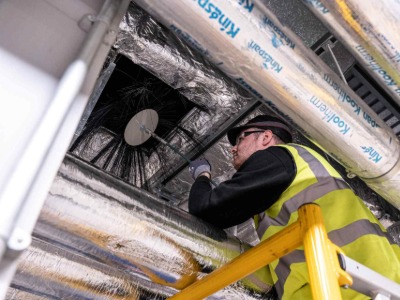
DW145 Fire Damper Testing: Your Complete Compliance Guide
Your guide to DW145 fire damper testing, UK compliance requirements, and how BESA member System Hygienics can help.
.jpeg)
DW145 is the BESA guide to good practice for the maintenance, testing, and inspection of fire dampers in buildings. Published by the Building Engineering Services Association, it sets out the procedures and frequencies for fire damper testing to ensure compliance with UK fire safety regulations. Fire dampers are passive fire protection devices installed within ductwork that automatically close when they detect heat, preventing the spread of fire and smoke through a building's ventilation system. Under UK law, fire dampers must be tested regularly, and DW145 provides the industry-recognised framework for carrying out this work to the required standard. System Hygienics is a BESA member and UK-compliance company that provides fire damper testing nationwide.
If you manage or own a building in the UK, fire safety compliance is not optional. It is a legal obligation. One of the most critical, and often overlooked, elements of fire safety is the maintenance and testing of fire dampers within your ventilation system. DW145 is the industry standard that governs how this work should be carried out, and understanding it is essential for anyone responsible for building safety.
This guide breaks down what DW145 covers, what fire dampers are, why regular testing matters, and how working with a BESA member compliance company like System Hygienics ensures your building meets the required standards.
What Are Fire Dampers?
Fire dampers are passive fire protection devices installed at the point where ductwork passes through a fire-rated wall, floor, or partition. Their purpose is straightforward: when a fire breaks out, fire dampers automatically close to prevent flames and hot gases from spreading through the ventilation system into other parts of the building.
Most fire dampers operate using a thermal element, typically a fusible link, that melts at a set temperature (usually around 72°C). When the link melts, the damper blade closes, sealing the duct opening and maintaining the fire resistance of the barrier it passes through. Some systems also use electromechanical actuators that respond to signals from the building's fire alarm system.
Without functioning fire dampers, a building's carefully designed fire compartmentation can be completely undermined. Ventilation ducts create direct pathways between rooms and floors, and if those pathways are not sealed during a fire, smoke and flames can travel rapidly through the building, putting lives at serious risk.
What Is DW145?
DW145 is the BESA guide to good practice for the inspection, testing, and maintenance of fire dampers and smoke control dampers in buildings. Published by the Building Engineering Services Association (BESA), it is the recognised UK industry standard for ensuring fire dampers remain functional throughout their service life.
The guide covers several key areas. It sets out recommended frequencies for fire damper testing, with a minimum interval of once every 12 months. It details the procedures for visual inspection, operational testing, and remedial action when faults are identified. It also provides guidance on record keeping and documentation, ensuring that building owners and facilities managers can demonstrate compliance during audits or inspections.
DW145 does not exist in isolation. It sits within a broader framework of UK fire safety legislation, including the Regulatory Reform (Fire Safety) Order 2005, BS 9999, and BESA specification DW144 for the installation of fire and smoke dampers. Together, these documents create a clear chain of responsibility from installation through to ongoing maintenance.
Why Does Fire Damper Testing Matter?
Fire damper testing is not simply a box-ticking exercise. Fire dampers are mechanical devices that can fail over time. Dust accumulation, corrosion, physical damage during building works, and general wear can all prevent a damper from closing properly when it needs to. A fire damper that has not been tested may look fine on the outside, but it may fail in a fire.
The consequences of failure can be severe. Beyond the obvious risk to life, building owners and facilities managers who cannot demonstrate that fire dampers have been properly maintained face potential enforcement action, insurance complications, and personal liability under UK fire safety law.
Regular fire damper testing in line with DW145 identifies faults before they become dangerous. It provides documented evidence that the building's passive fire protection systems are being maintained, and it gives the responsible person the information they need to commission remedial works where necessary.
The Role of BESA and Why Membership Matters
BESA, the Building Engineering Services Association, is the UK trade body for building engineering services. It sets the technical standards and codes of practice that define how work should be carried out across the ventilation, heating, and fire safety sectors. DW145 is one of several BESA publications that form the backbone of industry best practice.
Working with a BESA member company matters because BESA membership carries obligations. Member companies commit to operating in accordance with BESA standards, maintaining qualified personnel, and upholding the quality of work required by the association. When you appoint a BESA member to carry out fire damper testing, you can be assured that the work will be conducted in accordance with the recognised industry framework.
System Hygienics is a proud BESA member. This means that all fire damper testing carried out by System Hygienics follows DW145 procedures, with fully qualified engineers and comprehensive reporting as standard. It also means that the company is subject to the oversight and standards that BESA membership demands.
How System Hygienics Supports Your Compliance
System Hygienics is a UK compliance company with over 30 years of experience in ventilation hygiene and fire safety services. Established in 1993, the company operates nationwide with a team of more than 100 engineers and provides fire damper testing, along with a full range of ventilation cleaning, air quality, and compliance services.
What sets System Hygienics apart is the combination of technical expertise and practical project management. Their qualified sales engineers will visit your site to assess your requirements and develop a tailored compliance plan. Their operational teams then deliver the work with full documentation, including asset registers and detailed reporting that provides the evidence you need for audits and inspections.
For building owners and facilities managers who need to manage multiple compliance obligations, System Hygienics also offers the Complete Ventilation Compliance (CVC) Package, bringing together fire damper testing, ventilation cleaning, and related services under a single, coordinated programme.
Who Is Responsible for Fire Damper Compliance?
Under the Regulatory Reform (Fire Safety) Order 2005, the "responsible person" for fire safety in a building is typically the building owner, employer, or whoever has control of the premises. This person has a legal duty to carry out a fire risk assessment and ensure that all fire safety measures, including passive fire protection such as fire dampers, are properly maintained.
For facilities managers, this means fire damper testing must be included in your planned maintenance schedule. For building owners, it means ensuring that whoever manages the property on your behalf has appropriate arrangements in place.
Failure to maintain fire dampers is a compliance gap that fire risk assessors and enforcing authorities will identify. Having a documented programme of fire damper testing carried out by a qualified, BESA member company like System Hygienics closes that gap and provides the evidence trail you need.
Frequently Asked Questions
How often should fire dampers be tested? DW145 recommends fire damper testing at least once every 12 months. Some fire risk assessments may require more frequent testing depending on the building's use, age, or condition.
What happens if a fire damper fails its test? If a fire damper fails during testing, it should be reported and remedial works scheduled as soon as possible. System Hygienics provides both testing and remedial works services, allowing faults to be identified and resolved through a single provider.
Is fire damper testing a legal requirement in the UK? Yes. The Regulatory Reform (Fire Safety) Order 2005 requires the responsible person to maintain fire safety measures. Fire dampers form part of a building's passive fire protection, and regular testing is the recognised method of demonstrating that they are maintained. DW145 is the accepted standard for conducting this testing.
Can any contractor carry out fire damper testing? While there is no specific licensing requirement, appointing a BESA member company ensures the work is carried out to the recognised industry standard. System Hygienics, as a BESA member and established UK compliance company, provides fire damper testing to DW145 standards with full certification.
For more information about fire damper testing or to discuss your building's compliance requirements, visit systemhygienics.co.uk or contact the System Hygienics team to arrange a site visit.
.jpeg)
.jpeg)